Search and rescue
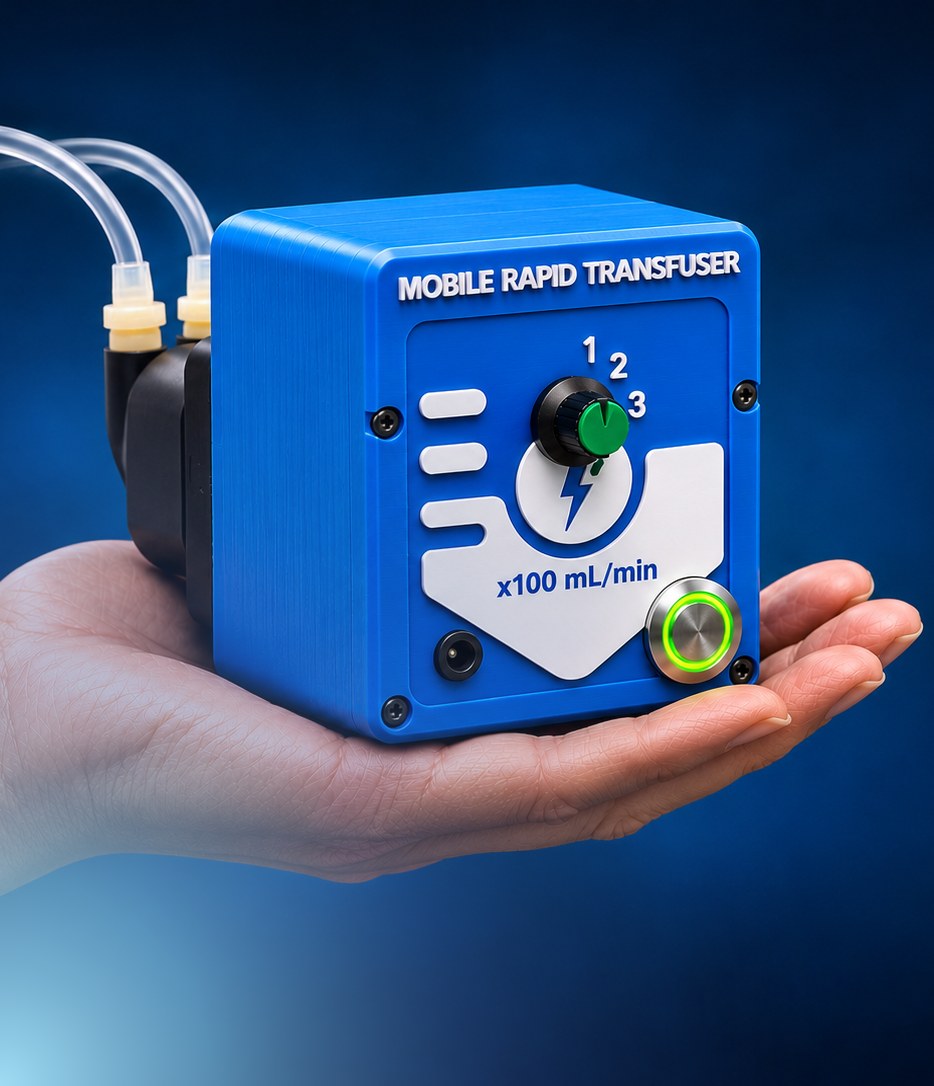
Light enough for the pack: 696 grams with the battery.

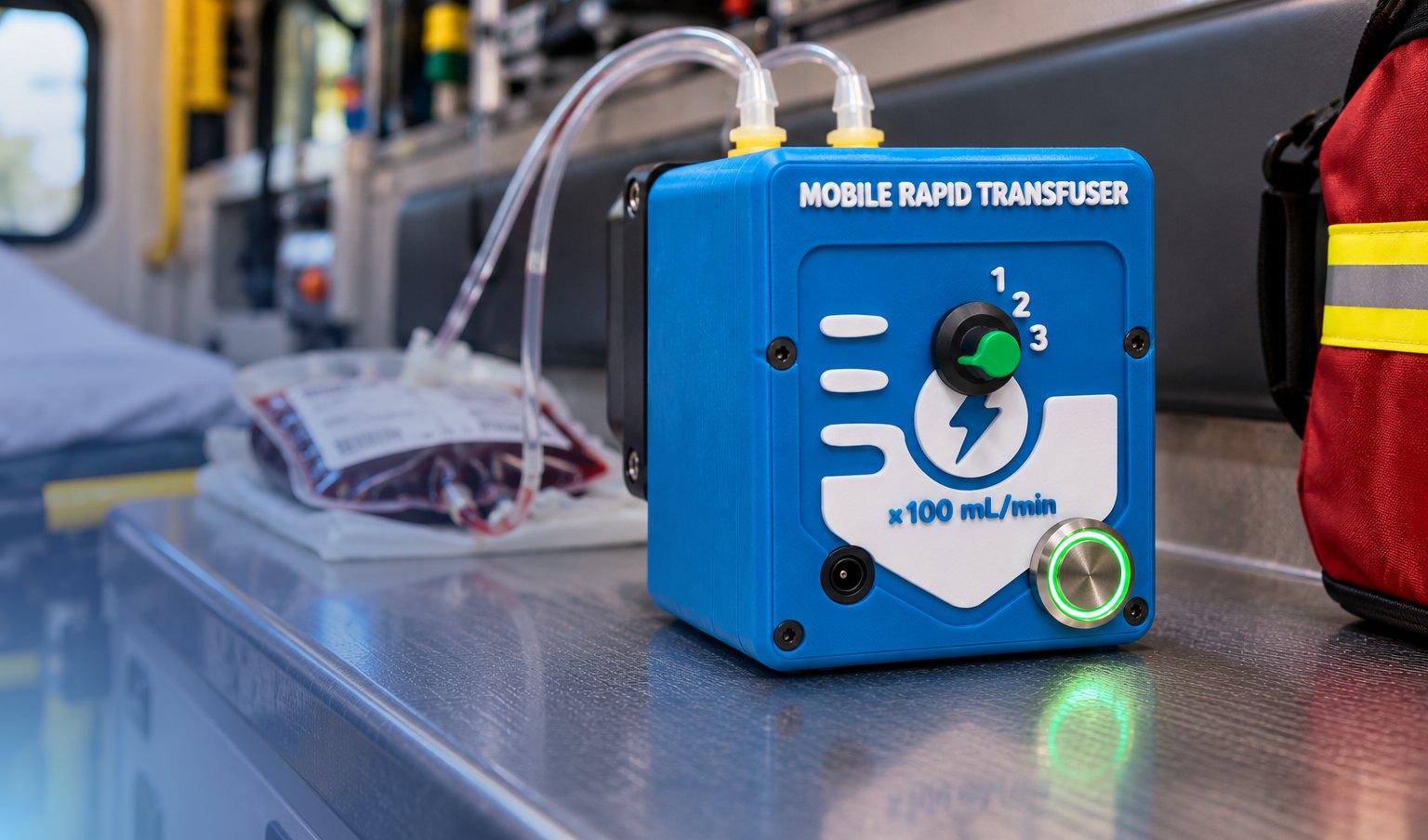
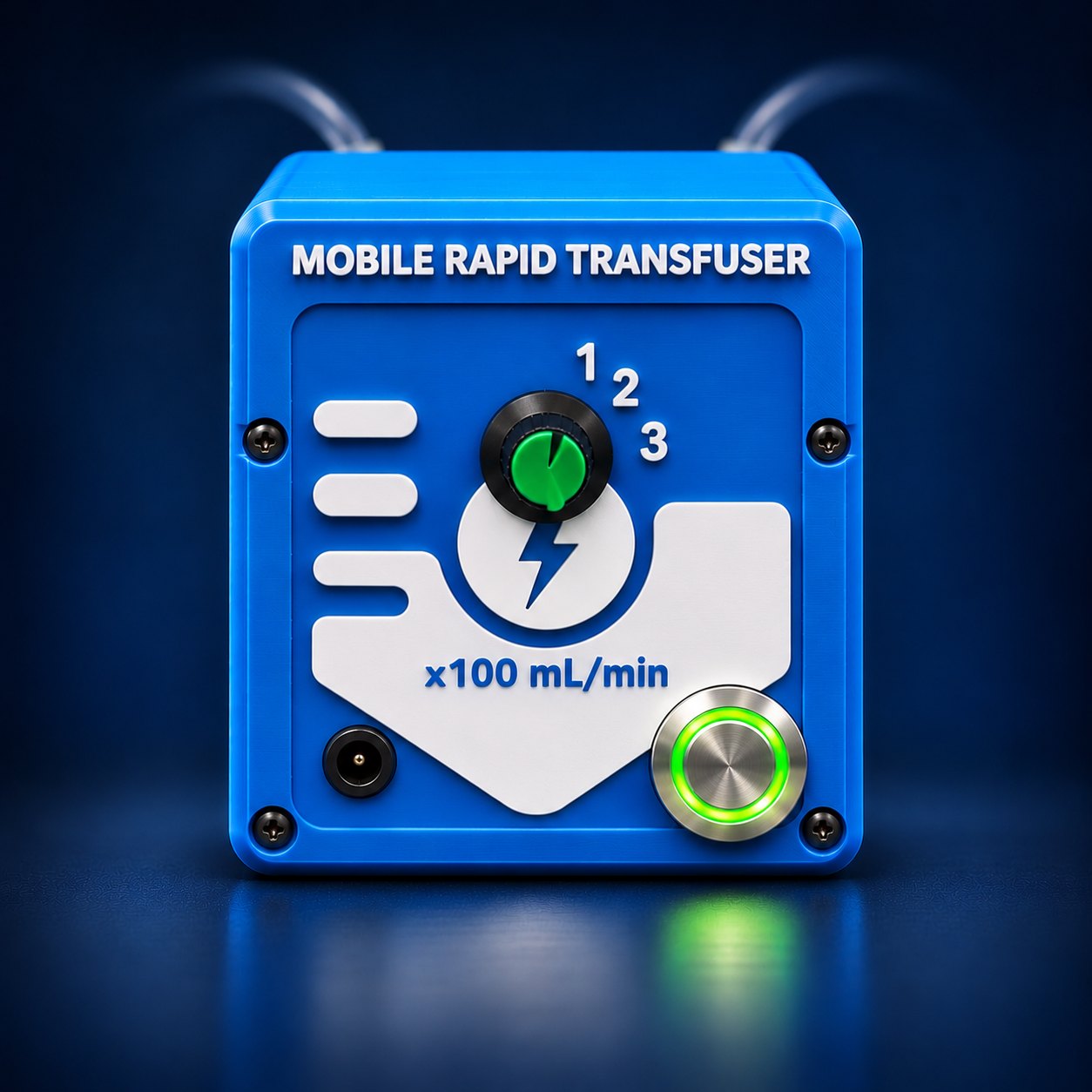
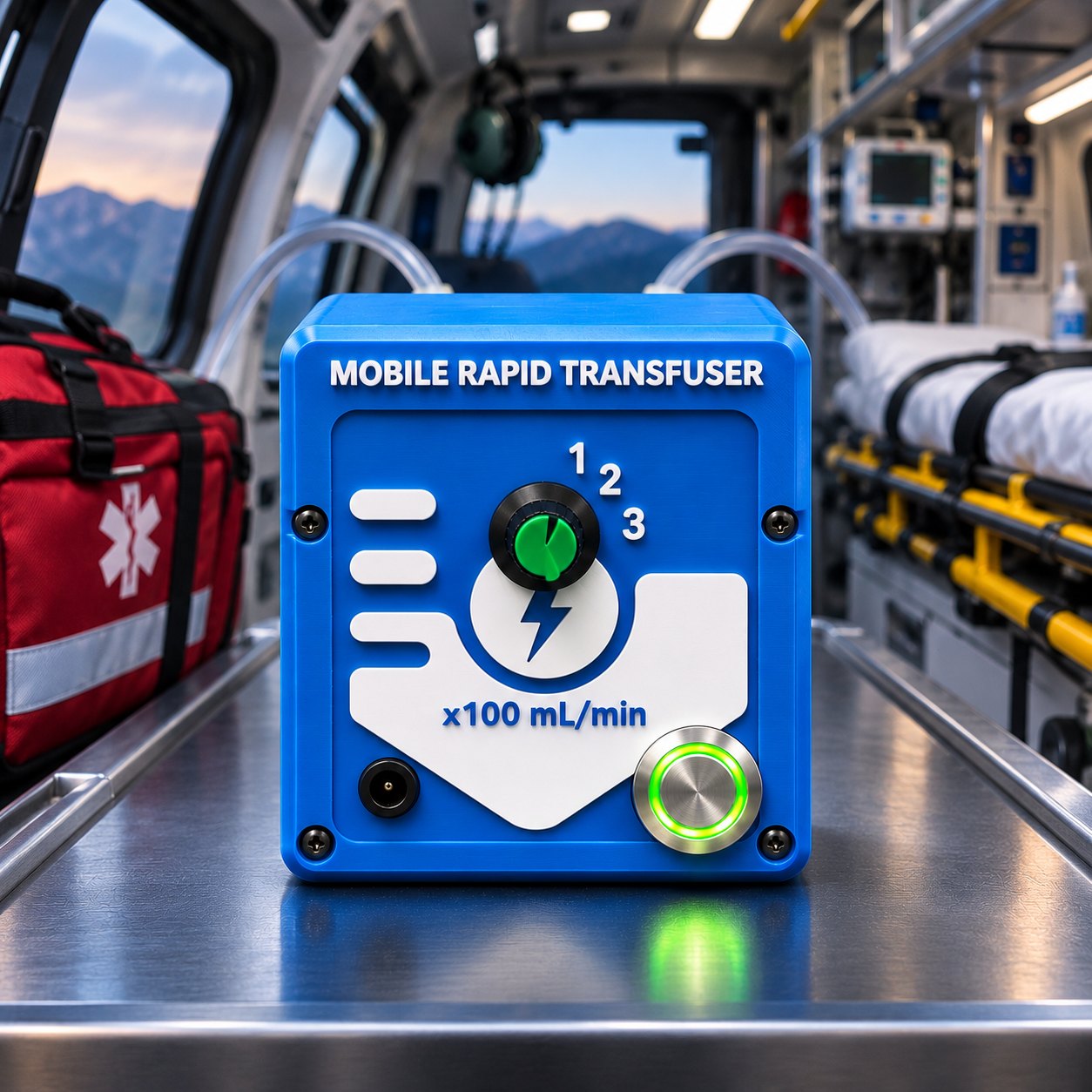
A 696-gram, battery-powered pump built to deliver blood and fluid at 100, 200 or 300 mL/min1, hands-free.
Meet the MRThigher mortality for every minute of delay before blood is started. Civilian penetrating trauma, 2024.2
Trauma centers solved their part of the hour with a 28-pound machine on a pole. The MRT is built for the part that happens before the door: in the pack, on the litter, in the aircraft.
They moved the patient toward the blood. We move the blood toward the patient.
Three panel settings, one button, and a sterile set that is the only thing the blood or fluid ever touches. The pump head sits outside; motor, battery and electronics stay inside the housing.
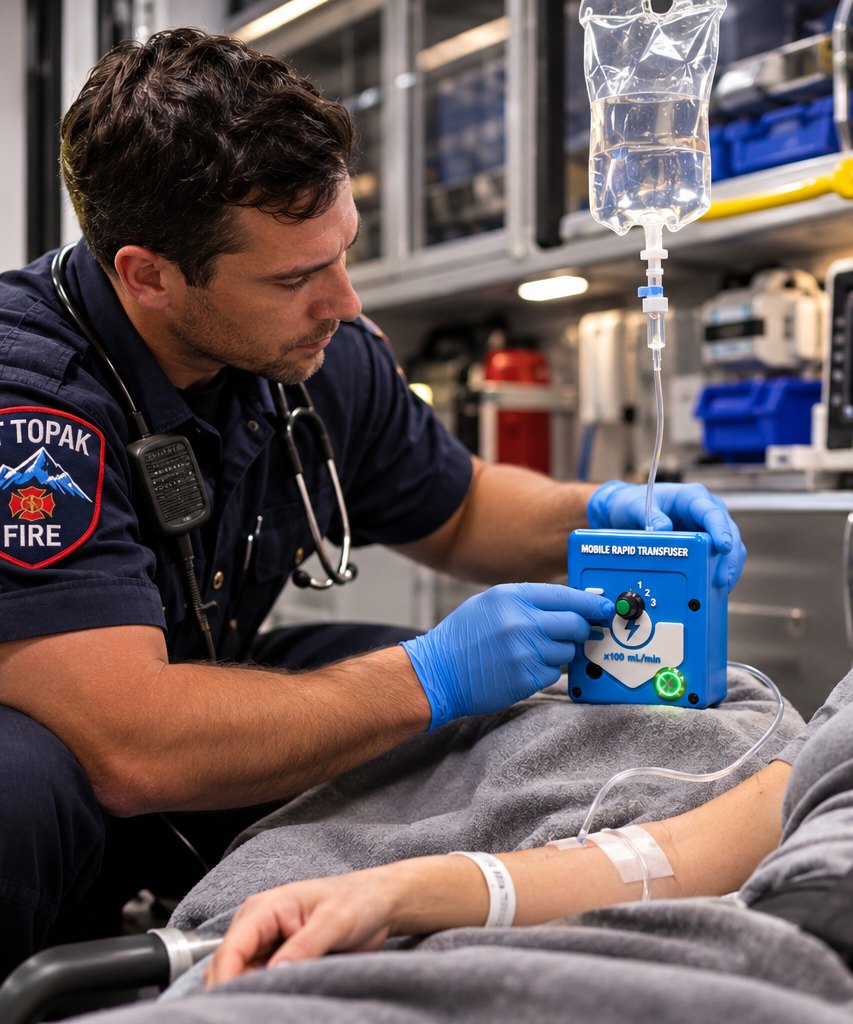
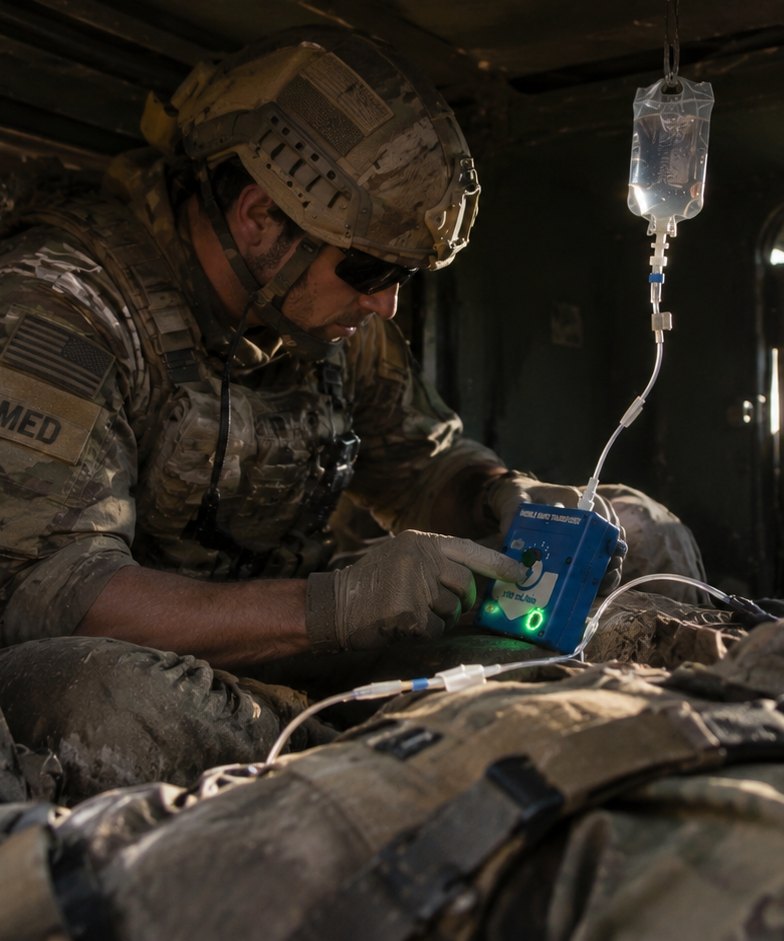
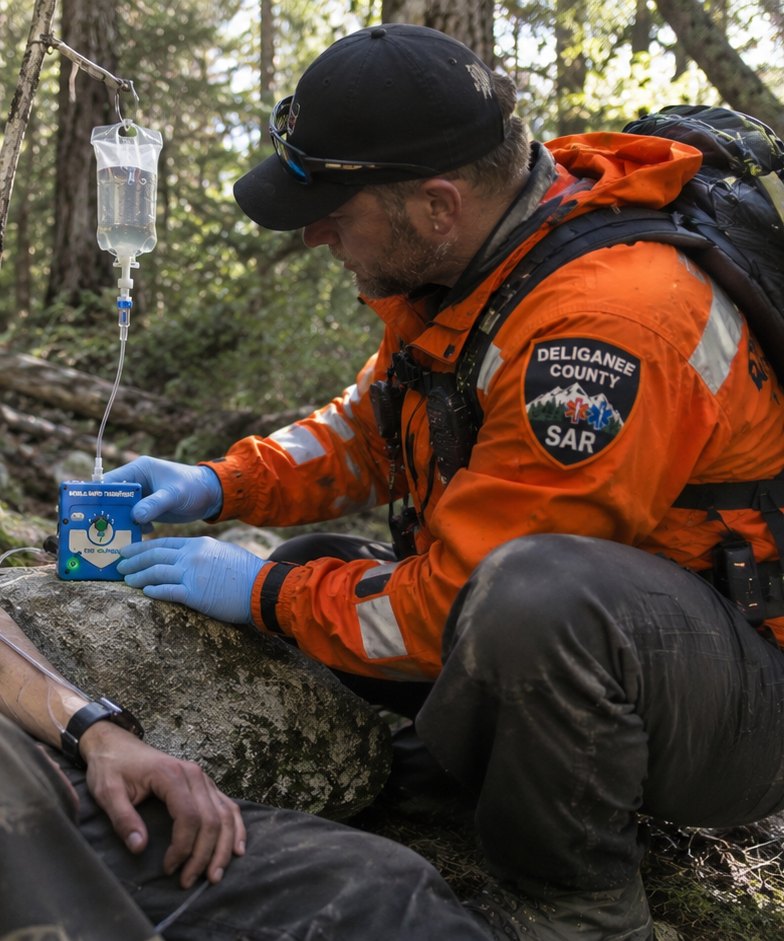
Turn the knob to 1, 2 or 3 and press the button. Flow continues while both hands treat the patient.
Only the sterile single-use set carries blood or saline. The pump segment loads from outside the housing.
The peristaltic rollers occlude the line whenever the pump is off. There is no clamp to forget.
12 V lithium-ion, 67.2 Wh, recharged in place through a front-panel jack from a 12.6 V charger.
Spike and prime a standard blood set with the MRT pump segment in line.
Open the pump-head cover, lay the segment in, close it. No tools; the housing stays closed.
Connect the patient line. Turn the knob to 1, 2 or 3.
Press the button. The ring lights green, the fluid moves, both hands are free.
Prehospital blood programs are spreading across search and rescue, EMS, air medical and military medicine. The device for giving it has not kept up.
Light enough for the pack: 696 grams with the battery.
More than 400 U.S. agencies now carry blood products on 911 calls.4
Self-powered: a 12 V, 67.2 Wh lithium-ion pack on board.
Tactical Combat Casualty Care lists whole blood first for hemorrhagic shock.4
Concept imagery. The MRT is a prototype. It is not FDA cleared and not for clinical use.
lighter than a 12.7 kg hospital rapid infuser.3
| Device | Moves fluid | Flow | Hands free | Weight |
|---|---|---|---|---|
Pressure bag Standard 300 mmHg cuff |
Pushes by bag pressure | About 257 mL/min at 300 mmHg, falling as it deflates | No, re-pump by hand | n/a |
Field warmers In-line, battery-powered |
No, warms only | Pass-through, 80 to 180 mL/min maximum | n/a | 0.26–1.7 kg |
Hand-operated infuser Syringe type, single use |
Yes, hand pump | One unit in about two minutes, operator-dependent | No, one hand pumps | 227 g |
MRT Auto Medic Systems · powered, battery |
Yes, powered | 100 / 200 / 300 mL/min settings1 | Yes | 696 g |
Hospital rapid infusers Pole-mounted, wall power |
Yes, powered | Up to 1,000–1,400 mL/min | Yes | 12.7–28.5 kg |
Competitor figures from published specifications.3
ground EMS agencies carrying blood products for 911 calls, June 2026. Up from about four in 2016.4
Auto Medic Systems is a medical device company in American Fork, Utah. Our lead product is the Mobile Rapid Transfuser.