
AMS, Auto Medic Systems
The Golden Hour

The hour starts where the patient is.

The first hour after injury has organized trauma care for fifty years. What the clock measures is time to blood.

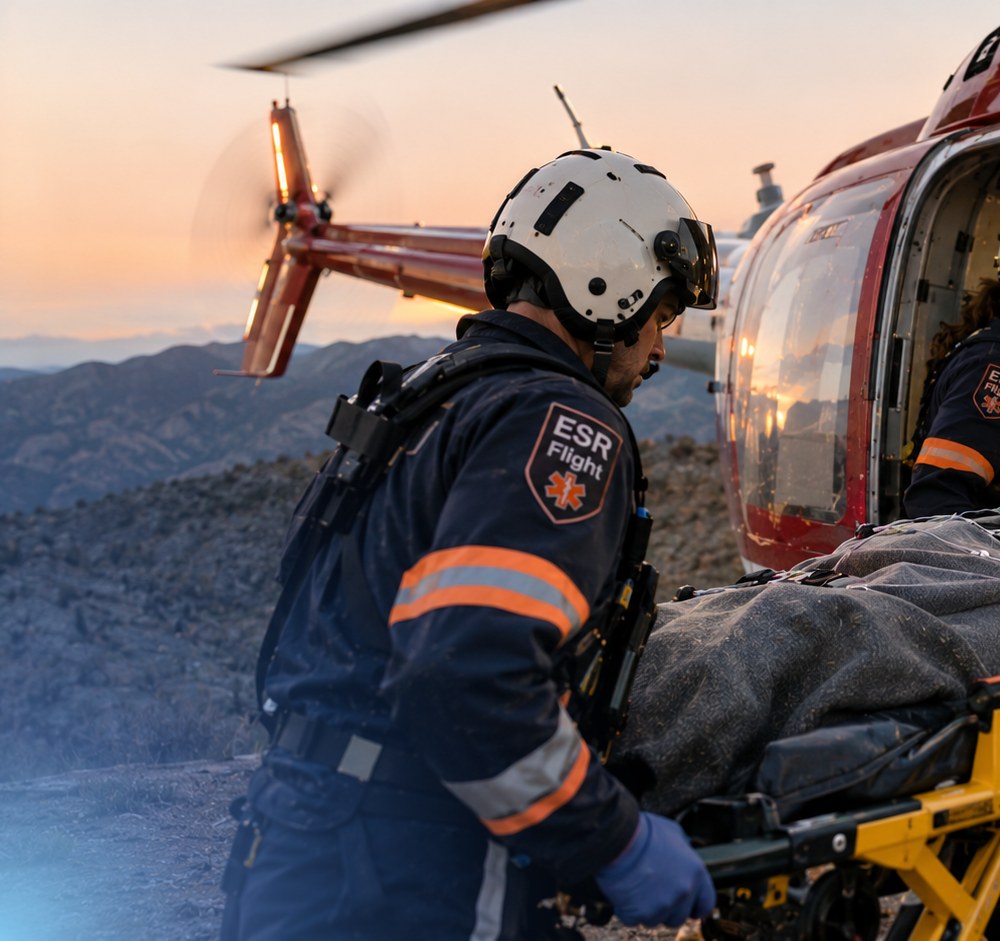
A flight medic moves a patient toward a helicopter at dusk
The burden
1.9M

deaths from hemorrhage every year, worldwide. About 1.5 million of them follow injury.1

What the clock is measuring.

In 1975 the trauma surgeon R Adams Cowley said the first hour after injury largely decides whether a critically injured person lives. The idea organized trauma systems for fifty years.

As a strict sixty-minute rule it has been argued over ever since. What is not argued is what the clock is measuring: time to blood.

The lead author of the military study put it plainly: the hour was never about reaching a hospital. “It's about getting them the care that's required.”2

The evidence

Every minute to blood counts.

2016
JAMA Surgery
U.S. military, Afghanistan
359

Lives saved by the sixty-minute mandate

When the U.S. military ordered casualty transport inside sixty minutes in 2009, median transport time fell from 90 to 43 minutes. Among the critically injured who were transfused and arrived inside the hour, 6.8 percent were killed in action. Among those who were not, 51 percent.2

2017
JAMA
Prehospital transfusion, Afghanistan
74%

Lower 24-hour mortality with blood before the hospital

Thirty-day mortality was 61 percent lower. The benefit concentrated when transfusion began within fifteen minutes of pickup.3

2023
J Trauma Acute Care Surg
PAMPer and STAAMP trials
2%

Higher odds of death for every minute of delay

Each minute of delay to an early resuscitative intervention raised the odds of death within thirty days by 2 percent.4

2024
J Trauma Acute Care Surg
Civilian penetrating trauma
11%

Higher mortality for every minute of delay to blood

Patients who got blood before the hospital received it 19 minutes earlier. Their in-hospital mortality was 7 percent, against 29 percent.5

2024
JAMA Surgery
In-hospital whole blood
14 min

Where survival drops most steeply

Survival falls with each minute to the first unit of whole blood. The steepest drop comes after 14 minutes from emergency department arrival.6

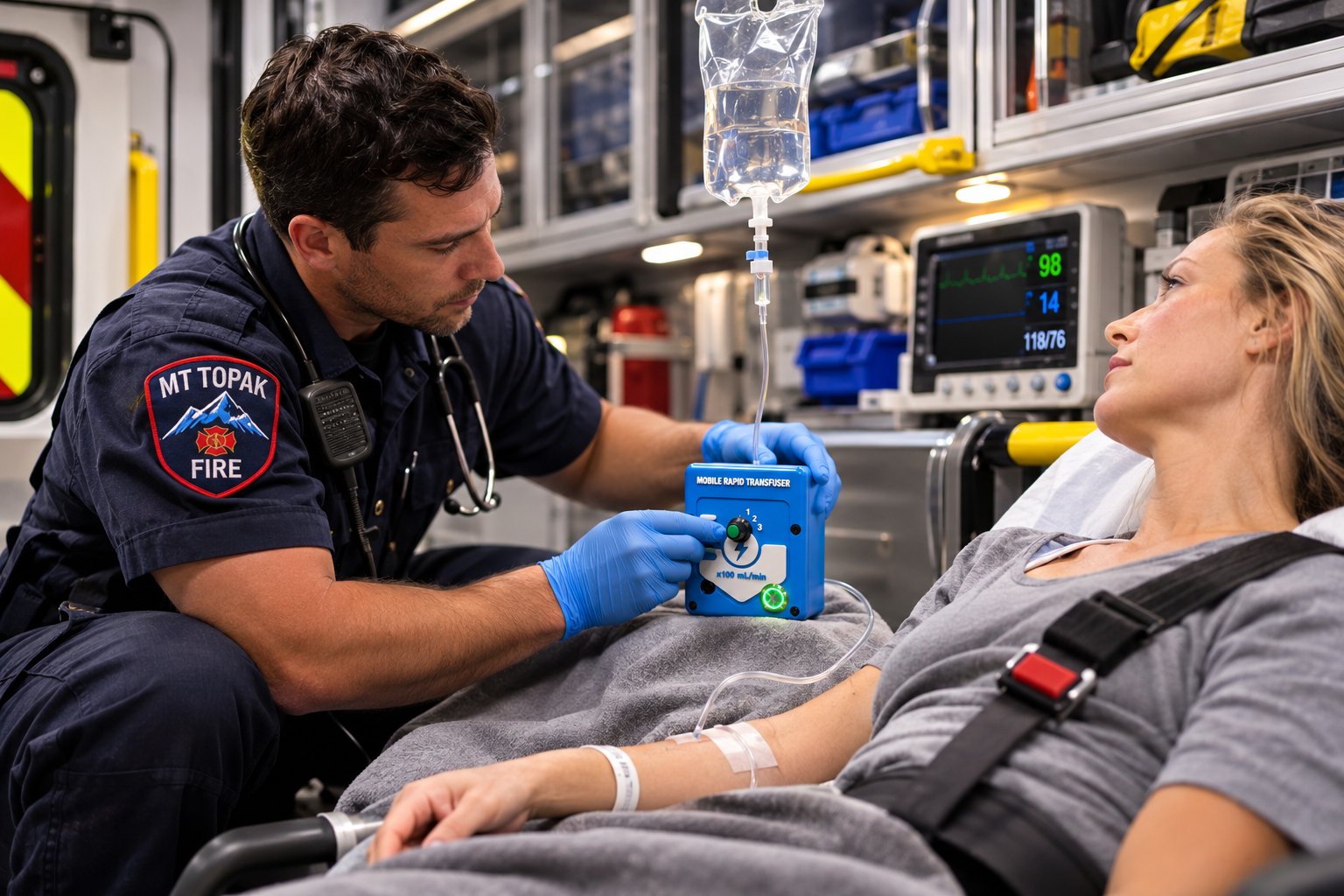
A paramedic adjusts the pump for a patient in the back of an ambulance
The gap

They moved the patient toward the blood. We move the blood toward the patient.

Trauma centers solved their part of the hour with a 28-pound machine on a pole. In the field the medic squeezes a pressure bag, re-pumps it as it deflates, and gives up a hand to do so. The MRT is built for the part that happens before the door.

Meet the MRT
257 mL/min
from a pressure bag at 300 mmHg, falling as the bag deflates7
28–63 lb
a hospital rapid infuser, on wall power and an IV pole7
696 g
the MRT with its battery, at 100, 200 or 300 mL/min nominal8

Concept imagery. The MRT is a prototype. It is not FDA cleared and not for clinical use.

Ready to talk?

Ask for the product brief, or tell us where you carry blood.

info@automedicsystems.com 800.932.3588